Alind
All work

AI KNOWLEDGE & RETRIEVAL SYSTEMS

Turning conversations into trusted knowledge.

How we transformed hundreds of unstructured customer conversations into a searchable knowledge system that supports better decisions without replacing human expertise.

Every consultation captured valuable insights. The challenge wasn't collecting information, it was preserving it, organising it, and making it genuinely useful long after the conversation had ended.

Client
Wonder Rooms
Focus
Consultation intelligence
Role
Product, AI, engineering
Year
2026
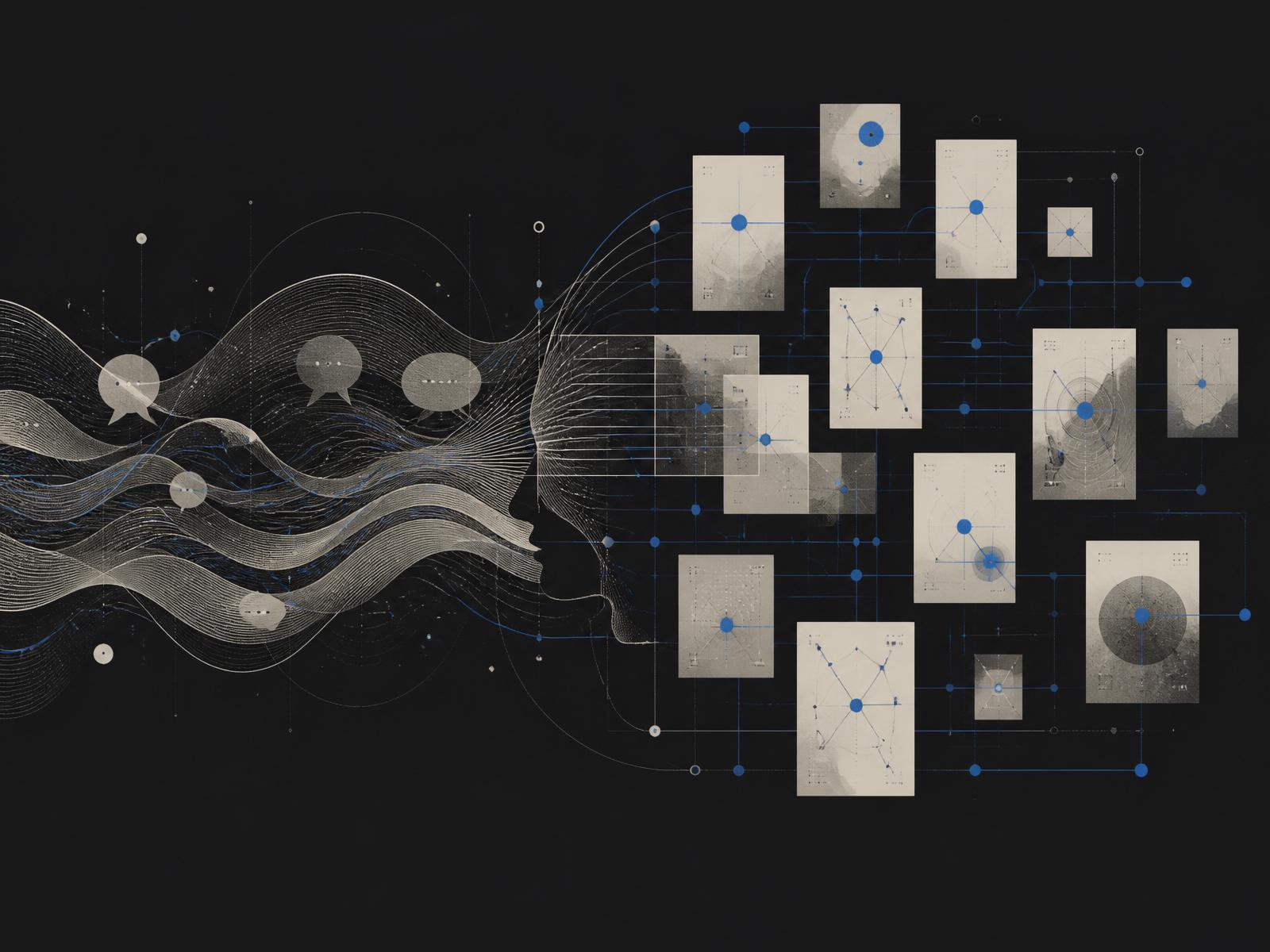
Conversation waveforms resolving into a structured grid of knowledge cards

the challenge

Every consultation generated a huge amount of information.

Parents spoke about routines, personalities, behaviour, room layouts, furniture, budgets, aspirations, frustrations and countless small details that shaped the final design.

Some information directly influenced design decisions. Some created important context. Some only became relevant weeks later.

The client wasn't struggling to collect information. The challenge was turning hours of natural conversation into structured operational knowledge without spending additional hours manually organising notes afterwards.

As the business grew, another challenge became increasingly clear. The consultation process depended heavily on the founder's own memory and experience. Every project required mentally filtering what mattered, translating conversations into actionable design briefs, and ensuring nothing important was lost between consultation and implementation.

The more consultations completed, the more valuable information existed. But that information remained trapped inside recordings, notes and individual experience.

The business wasn't lacking data. It was lacking a reliable way to use it.

the turning point

The obvious solution would have been better note-taking. Instead, we asked a different question.

What if every consultation could become part of a growing knowledge system instead of another document to archive?

Rather than designing AI to answer questions, we designed a system that could understand conversations, organise knowledge, preserve evidence, and always keep the consultant in control.

The objective wasn't automation. It was creating trusted operational knowledge that became more valuable with every customer interaction.

WALKTHROUGH 

designing the product

The product did not emerge fully formed.

Each version solved the next problem uncovered through real-world use.

  1. 01

    Transcription

    Capturing conversations digitally removed the need to manually rewrite notes, but transcripts quickly introduced a new challenge. They were comprehensive, yet difficult to navigate.

  2. 02

    Structured categories

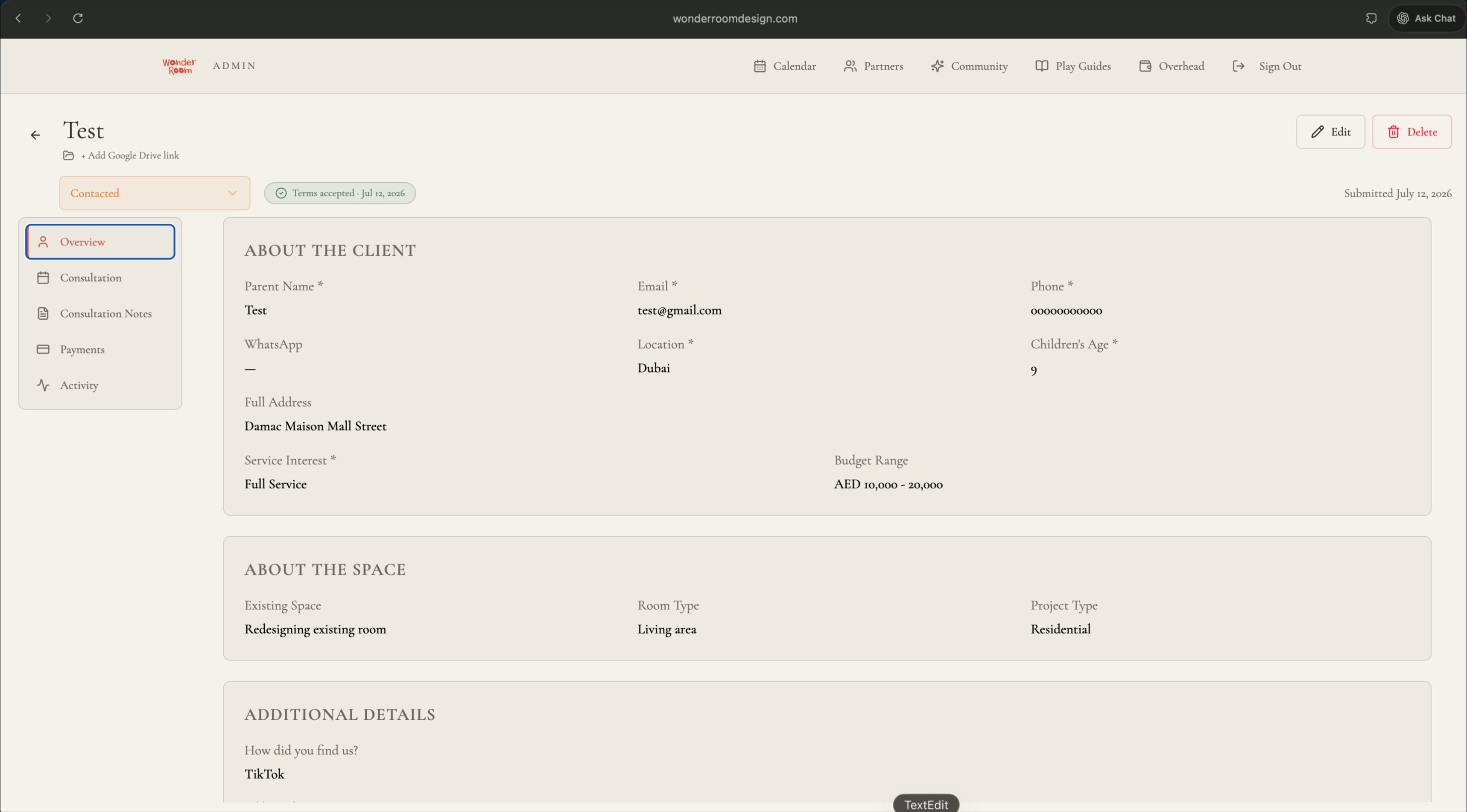
    The next version organised conversations into structured categories, automatically identifying information about the child, the family, the room, existing furniture, project goals and design requirements.

  3. 03

    Gap detection

    Instead of only extracting what was said, the platform began identifying what was missing. It highlighted unanswered questions, generated action items, and helped standardise future consultations.

  4. 04

    Operational memory

    As the knowledge base grew, the focus shifted to long-term memory. Every conversation became searchable, every project contributed to a richer understanding of future work.

engineering the details

Building trustworthy AI required several deliberate engineering decisions.

Human expertise is the source of truth

AI never replaces consultant judgement. Every manually edited field is protected, preserved and treated as authoritative. If newly generated AI insights conflict with human decisions, they are surfaced for review rather than automatically replacing existing information.

Every insight is traceable

Rather than asking users to trust AI blindly, every extracted field is linked back to supporting evidence from the original consultation. When uncertainty exists, the platform highlights ambiguity instead of inventing certainty.

Simplicity over unnecessary complexity

Although retrieval systems are often associated with vector databases and semantic search, they were intentionally not used here. Each customer generates a small collection of material, so deterministic retrieval of the complete customer context is both simpler and more reliable.

Built for continuous refinement

Structured extraction, protected edits, audit history, confidence validation, background processing and versioned outputs ensure knowledge remains accurate even as projects evolve over time. A living operational memory, not a static summary.

Technology decisions were driven by business requirements, not trends.

impact

The biggest outcome wasn't faster note-taking. It was changing how knowledge moved through the business.

Consultation insights became reusable rather than disposable.

Designers received structured briefs instead of manually interpreting long conversations.

Important customer context remained accessible throughout the project instead of depending on memory.

Every consultation strengthened the organisation's knowledge base rather than creating another isolated document.

Perhaps most importantly, the platform reduced dependence on a single individual. Knowledge became embedded within the business itself, creating the operational foundation needed to scale future services, onboard additional consultants and maintain consistency as the company grows.

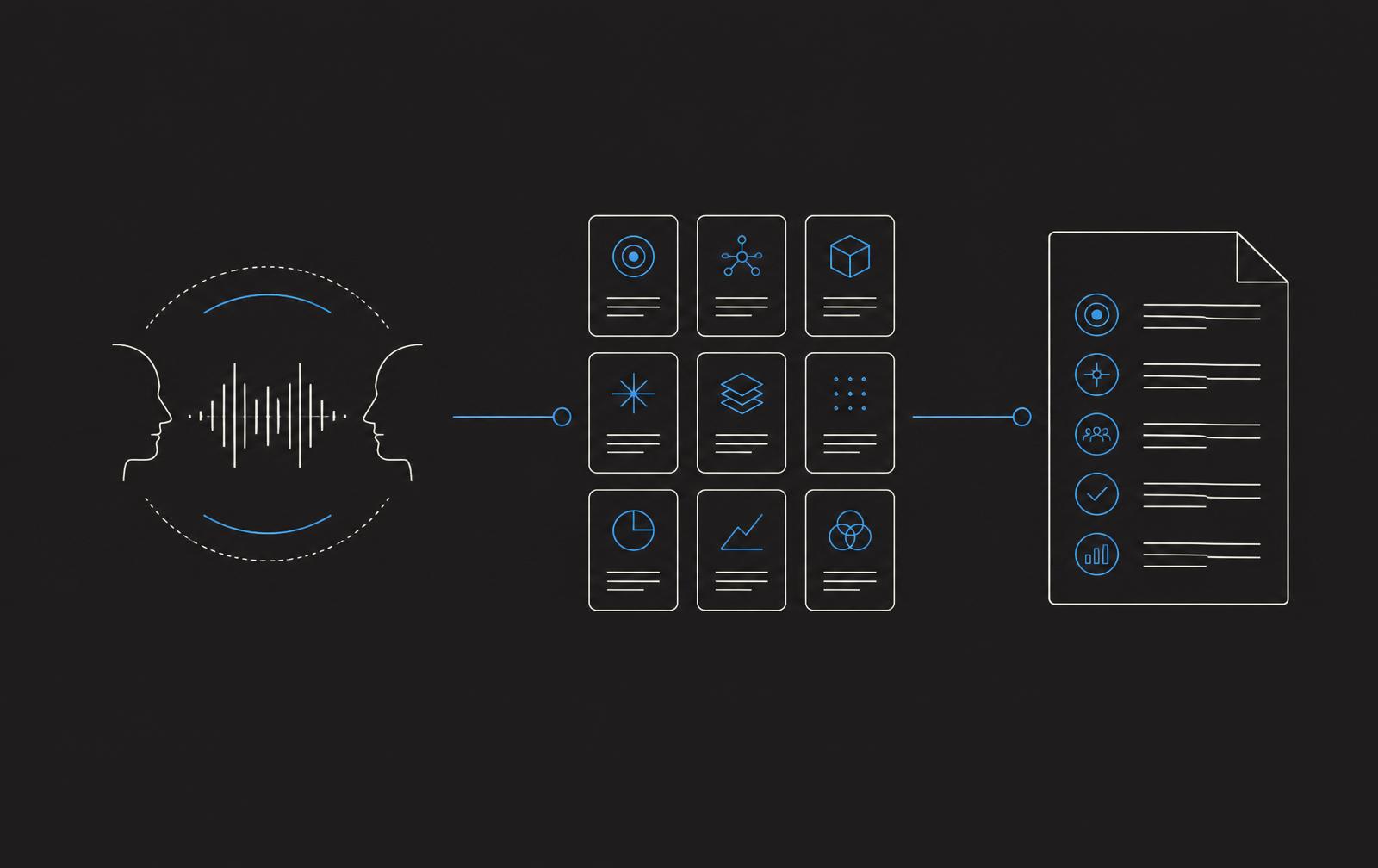
Diagram: conversation flows into structured knowledge cards, then into a reusable brief

outcomes

What changed, across the business.

Business

  • Consultation knowledge became a long-term business asset rather than temporary project documentation.
  • Customer information remained consistent across every stage of delivery.
  • The business gained a scalable foundation for future team growth.

Operational

  • Manual interpretation of consultation notes was significantly reduced.
  • Designers received clearer, more structured project information.
  • Information retrieval shifted from memory-based recall to searchable operational knowledge.

Customer experience

  • Conversations remained natural rather than constrained by rigid forms.
  • Important context was preserved throughout the entire customer journey.
  • AI worked quietly in the background while the relationship remained entirely human.

what we learned

The objective was never to build another AI feature. It was to capture expertise in a way that could outlive individual conversations.

When knowledge becomes structured, trusted and reusable, every customer interaction improves the next one. That's when AI stops being a demonstration of technology and starts becoming operational infrastructure.

AI isn't valuable because it remembers everything.

It's valuable because people no longer have to.

your version of this

Want a system like this in your business?

We help teams turn the conversations, documents and decisions they already have into operational knowledge they can trust.